Introduction
Education plays an important role in personal growth, professional development, and long-term success. It helps people develop valuable knowledge, improve their skills, explore new interests, and prepare for a wide range of career opportunities. Whether someone is completing high school, choosing a university, returning to education as an adult, or developing new professional skills, having the right information can make the learning journey easier.
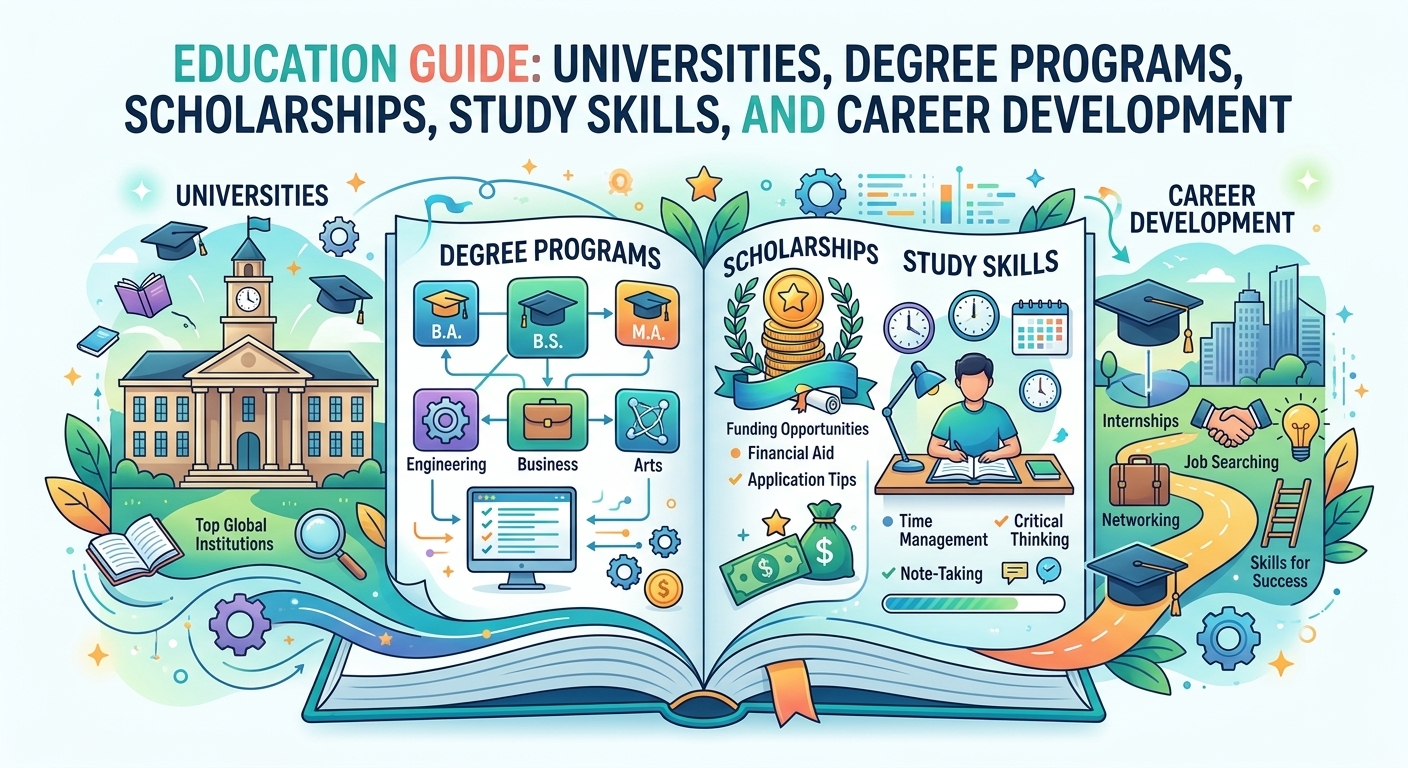
This education guide explores the major areas of modern education, including academic programs, university admissions, financial assistance, online learning, effective study habits, and career planning. Understanding these subjects can help students and lifelong learners make informed decisions about their educational goals.
1. Understanding the Different Levels of Education
Education generally includes several stages, each designed to develop particular knowledge and abilities. Understanding these stages helps learners identify the right path for their needs.
Primary and Secondary Education
Primary education establishes foundational skills such as reading, writing, mathematics, communication, and problem-solving. Secondary education builds on these foundations through more advanced subjects and introduces students to different academic and career interests.
Strong performance at these levels can prepare students for higher education, vocational training, or entry-level employment opportunities.
Higher Education
Higher education includes colleges, universities, and other institutions that offer advanced academic and professional qualifications. Students can explore subjects such as business, engineering, computer science, healthcare, education, social sciences, and the humanities.
Choosing a suitable program requires consideration of personal interests, admission requirements, program structure, costs, and future career opportunities.
Vocational and Professional Training
Vocational education focuses on practical knowledge and occupation-specific skills. Depending on the program, learners may receive training in information technology, construction, healthcare support, design, hospitality, or technical services.
These programs can be useful for people who prefer practical learning or want to develop skills for a particular profession.
2. How to Choose the Right University
Selecting a university is an important educational decision. The best institution for one student may not be the right choice for another because learners have different goals, budgets, and academic interests.
Before applying, consider the following factors:
- Academic programs: Check whether the institution offers your preferred subject and relevant specializations.
- Accreditation: Verify the institution’s recognition and the qualifications it awards.
- Tuition and expenses: Compare tuition, accommodation, transportation, books, and other costs.
- Learning environment: Research class sizes, teaching methods, facilities, and academic support.
- Career opportunities: Explore internships, practical projects, professional connections, and graduate outcomes.
- Location and flexibility: Consider campus location, online options, part-time study, and commuting requirements.
Creating a shortlist of suitable institutions makes it easier to compare options objectively. Students should also review official university websites for current program details and application requirements.
3. Understanding University Admissions
University admissions procedures vary by institution, country, and degree level. Preparing early gives applicants more time to collect documents, complete applications, and meet important deadlines.
Common Admission Requirements
Depending on the program, applicants may need to provide:
- Previous academic transcripts and certificates
- An application form and personal information
- A statement of purpose or personal essay
- Letters of recommendation
- Standardized test results, where required
- Proof of language proficiency, where applicable
- Identification and additional supporting documents
Not every institution requires all these materials. Applicants should always follow the instructions published by their chosen university.
Preparing a Strong Application
A strong application presents an accurate picture of the applicant’s academic background, interests, achievements, and goals. Applicants should organize their documents, check their information carefully, and submit everything before the relevant deadline.
A personal statement should explain genuine interests and experiences rather than rely on generic claims. Students should also keep copies of submitted documents and monitor application updates.
4. Scholarships and Financial Assistance
The cost of education can influence which programs students are able to pursue. Scholarships and other forms of financial assistance may help reduce the financial burden.
Types of Student Funding
Merit-based scholarships: These awards recognize academic achievement, leadership, talents, or other accomplishments.
Need-based financial aid: This assistance is determined partly by a student’s or family’s financial circumstances.
Grants: Grants provide funding under specific eligibility conditions and generally do not require repayment.
Student loans: Loans help cover educational expenses but usually must be repaid according to agreed terms.
Work-study opportunities: Some institutions offer eligible students opportunities to work while studying.
How to Find Scholarships
Begin by checking university financial aid offices, government education departments, recognized scholarship organizations, and relevant professional associations.
Review eligibility rules, required documents, deadlines, and renewal conditions before applying. Be cautious of organizations that promise guaranteed scholarships in exchange for suspicious upfront payments or sensitive personal information.
5. Developing Effective Study Skills
Successful learning depends on more than the number of hours spent studying. Effective methods help students understand information, remember important concepts, and prepare for assessments.
Create a Realistic Study Schedule
Divide large assignments into smaller tasks and allocate time for each subject. A realistic schedule should include breaks, revision sessions, and enough flexibility to accommodate unexpected responsibilities.
Use Active Recall
Instead of repeatedly reading the same material, close your notes and try to explain the main ideas from memory. Practice questions, flashcards, and short self-tests can help identify areas that need more attention.
Practice Spaced Repetition
Review information over several days or weeks instead of attempting to memorize everything in one session. Returning to important concepts at planned intervals can support long-term retention.
Take Useful Notes
Organize notes around key concepts, definitions, examples, and questions. Summarizing a lesson in your own words can help reveal whether you genuinely understand the material.
Protect Your Well-Being
Consistent sleep, regular movement, breaks, and a suitable study environment can support concentration. If a particular study method is not working, adjust your approach rather than simply increasing study hours.
6. Online Learning and Digital Education
Digital education has expanded access to courses, learning materials, and professional development opportunities. Learners can study through online classes, recorded lectures, interactive exercises, and virtual collaboration tools.
Benefits of Online Learning
Online education can offer scheduling flexibility, access to a wider range of subjects, and opportunities to learn from different locations. It may be particularly useful for working professionals, parents, and students who cannot attend traditional classes.
Challenges of Digital Learning
Online learners may experience distractions, limited interaction, technical difficulties, or problems maintaining a regular schedule. Reliable internet access and a suitable device may also be necessary.
To improve the experience, set specific study hours, choose a quiet workspace, participate in course discussions, and track assignments carefully.
Choosing an Online Course
Before enrolling, examine the provider’s reputation, curriculum, instructor qualifications, assessment methods, total cost, and certificate recognition. Check whether the course offers practical exercises or support when learners have questions.
A certificate’s value depends on the provider, the subject, and how employers or educational institutions recognize it.
7. Choosing a Degree Program
Degree selection should reflect a combination of personal interests, academic strengths, financial circumstances, and long-term goals.
Associate and Bachelor’s Degrees
Associate degrees are offered in some education systems and may provide a shorter route to occupational preparation or further study. Bachelor’s degrees generally provide broader undergraduate education and subject-specific knowledge.
Master’s Degrees
Master’s programs allow students to develop advanced expertise after completing an appropriate undergraduate qualification. Some programs emphasize research, while others focus on professional practice.
Doctoral and Research Programs
Doctoral programs are designed for advanced research, scholarly investigation, or specialized professional preparation. Applicants should review faculty expertise, research facilities, funding opportunities, and program expectations.
Certificate Programs
Certificates can help learners develop targeted skills without necessarily completing a full degree. They may be useful for professional development, career transitions, or exploring a new subject.
Before selecting a qualification, compare entry requirements, course content, total costs, study duration, and the recognition of the awarding institution.
8. Career Development and Education
Education can open pathways to different careers, but academic qualifications are only one part of professional development. Practical experience, communication, problem-solving, teamwork, and adaptability also matter.
Connect Learning With Career Goals
Research the qualifications and skills commonly required in your chosen field. Job advertisements, professional associations, informational interviews, and career guidance services can help you understand employer expectations.
Gain Practical Experience
Internships, volunteering, research projects, part-time work, and personal projects can help students apply classroom knowledge. These experiences can also provide examples to discuss during interviews.
Continue Learning Throughout Your Career
Industries change as technologies, regulations, and workplace expectations develop. Short courses, professional certifications, workshops, and independent study can help workers keep their knowledge current.
A long-term learning plan should be flexible enough to accommodate changing interests and opportunities.
9. Education for International Students
Studying in another country can provide academic, cultural, and professional experiences. However, international applicants may need to complete additional steps before enrollment.
Important considerations include:
- Reviewing international admission requirements
- Meeting language proficiency standards where required
- Understanding tuition and living expenses
- Checking scholarship eligibility for international applicants
- Preparing academic transcripts and certified translations if needed
- Researching student visa and immigration requirements through official government sources
- Arranging accommodation, healthcare coverage, and travel plans
Requirements differ by country and institution. Students should use official university and government resources instead of relying exclusively on third-party summaries.
10. Common Educational Challenges and Practical Solutions
Students can face a variety of obstacles throughout their educational journey. Identifying the problem early can help them find an appropriate solution.
Time management: Use a weekly schedule, set priorities, and break assignments into manageable tasks.
Financial pressure: Research scholarships, compare program costs, and speak with an institution’s financial aid office.
Difficulty understanding subjects: Seek help from instructors, tutors, study groups, or additional learning materials.
Lack of motivation: Establish achievable goals and track progress instead of focusing only on distant outcomes.
Digital distractions: Silence unnecessary notifications and create dedicated periods for focused study.
Uncertainty about career choices: Explore different fields, speak with professionals, and consider introductory courses before committing to a long program.
Students should remember that seeking academic guidance is a constructive step, not a sign of failure.
11. How Parents and Educators Can Support Learning
Families and educators play important roles in creating environments where students can learn effectively.
Parents can encourage curiosity, establish consistent routines, and communicate with teachers when a student needs additional support. They can also help learners explore interests without placing unnecessary pressure on them to follow a particular career path.
Educators can support students through clear explanations, constructive feedback, accessible learning materials, and opportunities to practice new skills. Recognizing that learners have different strengths can help create a more supportive educational experience.
Collaboration among students, families, teachers, and academic advisers can make it easier to identify challenges and develop practical solutions.
12. Building a Personal Education Plan
A personal education plan provides a structured way to turn long-term ambitions into manageable actions.
Start by identifying your main goal. You might want to enter university, complete a degree, earn a professional certificate, improve your grades, or transition into a new career.
Next, identify the requirements for achieving that goal. Research suitable institutions or courses, estimate the costs, note relevant deadlines, and determine which skills you need to develop.
Break the plan into smaller milestones. For example, an applicant might research programs during the first week, prepare academic documents during the second, and complete application materials before the deadline.
Review your progress regularly and revise your plan when circumstances change. A useful education plan should guide your decisions without preventing you from considering better opportunities.
Frequently Asked Questions About Education
What is an education guide?
An education guide is a resource that explains learning opportunities, academic programs, admission processes, funding options, study strategies, and career development. It helps learners make more informed educational decisions.
How do I choose the right university?
Compare academic programs, accreditation, tuition costs, financial aid, location, learning support, and career opportunities. Check official university information before applying.
How can I find scholarships for college?
Search official university financial aid pages, government education resources, and reputable scholarship organizations. Review each award’s eligibility requirements and application deadlines.
Is online learning effective?
Online learning can be effective when the course is well designed and learners have appropriate resources, consistent study habits, and opportunities to practice or receive feedback.
Which degree is best for career growth?
There is no single best degree for everyone. The right qualification depends on your interests, preferred occupation, financial circumstances, and the requirements of your chosen field.
How can students improve their academic performance?
Students can develop consistent study routines, practice active recall, review material over time, seek help when needed, and maintain a manageable balance between academic work and personal well-being.
Why is lifelong learning important?
Lifelong learning helps people adapt to changing industries, explore new interests, strengthen professional skills, and pursue opportunities throughout their lives.
Conclusion
Education is a continuing process that supports intellectual growth, practical skill development, and career exploration. From selecting a university and understanding financial aid to developing effective study habits and planning a career, informed decisions can make learning more purposeful.
Every learner has different circumstances and ambitions. By researching opportunities, setting realistic goals, and using reliable educational resources, students can build a learning plan that reflects their individual needs.
Continue exploring education topics, compare available opportunities carefully, and take practical steps toward your academic and professional goals.